A revolution is under way. By 2030, more than one in ten people will routinely use artificial intelligence agents to make purchases on their behalf. This is one of the predictions to emerge from the futurists’ analysis presented in Mastercard’s new report, A Short History of the Future of Shopping and Payments.
Based on Mastercard research and contributions from four futurists from the United States, Europe and Asia, the report, previewed by IAnews24, explores how everyday life could change by the end of the decade.
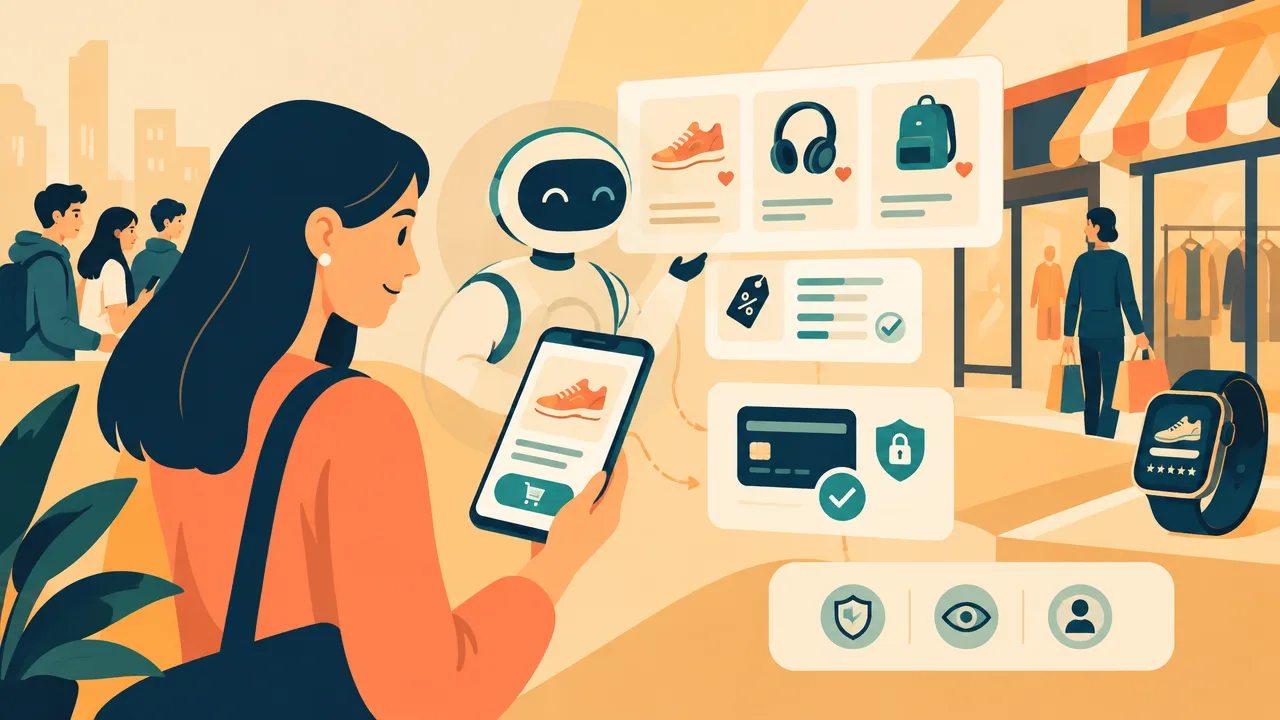
Among the scenarios outlined are AI agents that can negotiate prices, smartwatches and smart rings that can show how products perform after purchase, and even physical AI agents entering shops for the first time. These future possibilities come alongside changes that are already visible in shopping habits.
AI-assisted shopping is not just an emerging trend. It is already widespread among young Italians. According to the report, 70% of teenagers use an AI assistant at least once a month to look up product information, while 63% use one to compare purchase options.
More than six in ten rely on AI to find better prices and discounts and to get personalised recommendations. The shift from using AI for inspiration and comparison to giving it a more direct role in shopping is already under way. Some 45% of Italian teenagers use an AI assistant at least once a month to complete a purchase.
“We have entered a new phase of the digital economy, in which AI agents will increasingly be able to act on behalf of consumers, supporting them from product discovery through to the completion of real transactions.
“Our report shows that speed, personalisation and trust are set to redefine the shopping experience. For this shift to take hold at scale, it will be essential to provide users with security, transparency and control.
“At Mastercard, we continually invest in technology and innovation to build an ecosystem in which AI can operate reliably and securely, supporting the next stage of digital commerce,” said Luca Corti, Mastercard’s Country Manager for Italy.
The report’s predictions, developed with contributions from four international experts on the future of AI and commerce — Magnus Lindkvist, Patrick Dixon MBE, Katja Forbes and Theodora Lau — outline changes that consumers and businesses will need to prepare for. Routine purchases, such as groceries, medicines and subscriptions, could be among the first to be delegated to AI agents.
In this scenario, AI could take care of repeat purchases, while shopping would still be about discovery, inspiration and enjoyment. In Italy, teenagers’ familiarity with AI tools is already reflected in their willingness to delegate some purchasing decisions.
They are most open to using an AI assistant for clothing and footwear (43%), electronics and technology (39%), and books, music and films (36%).
Trust in AI recommendations is also growing. Some 40% of Italian teenagers say they would trust an AI product recommendation more than advice from a friend, while nearly one in five (18%) would choose AI over their parents’ advice.
As AI becomes more common in everyday shopping, consumers are clear about the safeguards they expect. Among Italian parents, 38% say it is important to retain control over purchasing decisions, while 33% pay particular attention to the risk of fraud or unauthorised use.
Younger consumers also place great importance on transparency and control.
These findings confirm that trust will be essential to the development of agentic commerce. Clear rules on identity, consent and authorisation, together with high standards of security and transparency, will help consumers stay in control as AI acts on their behalf more often.
AI agents will be able to analyse large amounts of information quickly, verify brands’ claims, consult customer reviews and feedback, and complete purchases. For retailers, this will mean adapting loyalty programmes, customer relationships and digital experiences to the needs of agents as well as people.
Product information, brands’ claims and terms of sale will need to be easy for agents to read and verify. For example, a sustainability claim should be backed by a certification that an agent can find, read and check.
In agentic commerce, people will rely on technology not only for information, but also to make decisions and act on their behalf. Trust will therefore become central. Retailers and financial institutions will need to help build it through clear rules on identity, consent, authorisation and accountability.
The report also predicts that by 2030, at least three regulators in G20 countries will issue formal guidance on registering and monitoring AI agents.
In this scenario, payment intent — the consumer’s authorisation for a purchase to be made on their behalf — will become more important and will need to be recognised before payment is completed.
With AI agents able to compare and negotiate offers in real time, the displayed price could become a starting point rather than the only reference. Competition could shift towards dynamic, personalised offers tailored to each consumer’s needs.
Many of these changes are already taking hold, and younger generations are adopting behaviours that are set to reshape commerce in the years ahead. The challenge for the entire ecosystem will be to support this shift while ensuring security, transparency and control, so that trust can underpin the way people shop.
Sources and documents
Original article by Umberto Mancini.